

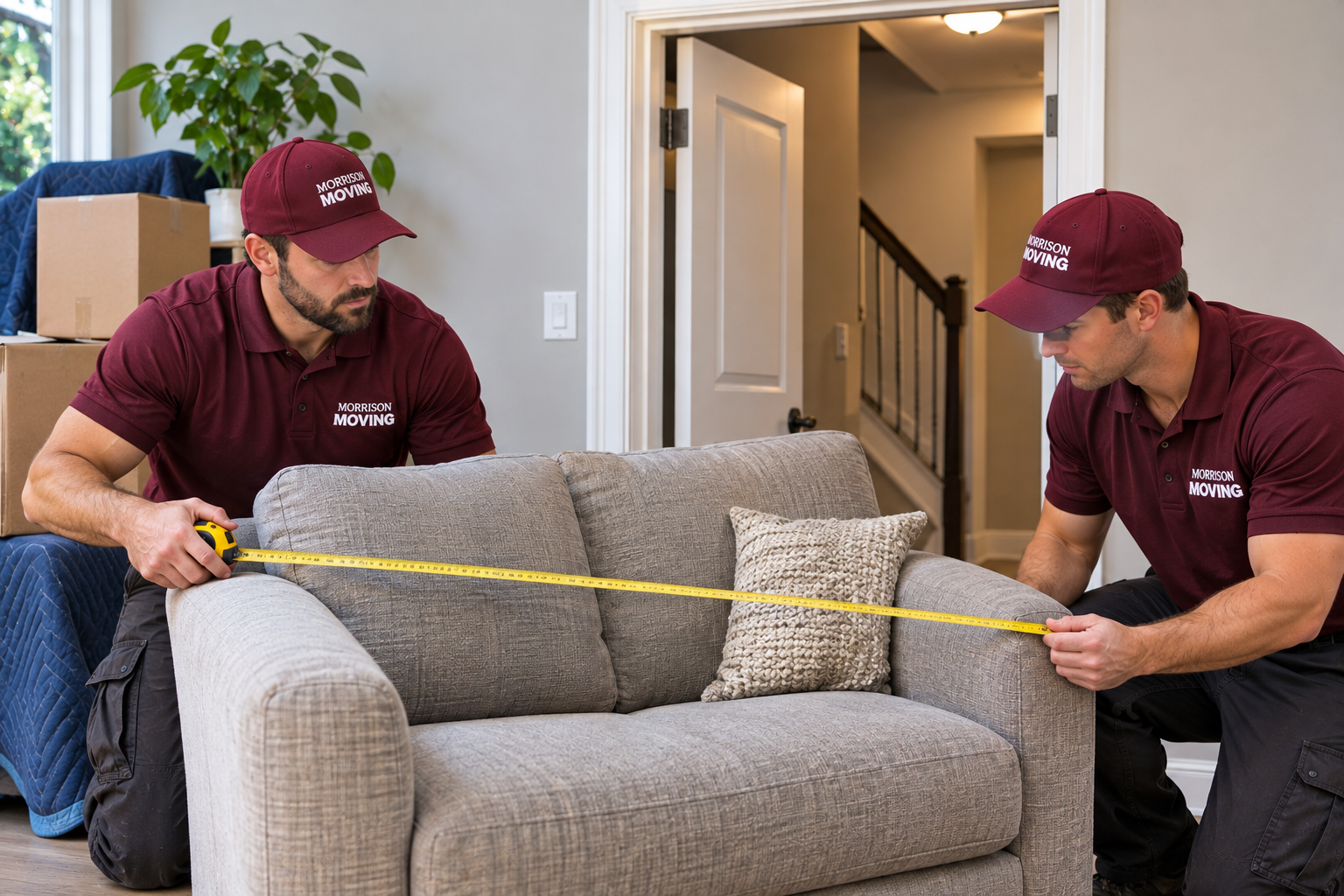
Discovering that a sofa, wardrobe or large cabinet will not fit through a doorway can create unexpected complications during a residential move. Furniture that fits comfortably inside one home may be difficult to remove or bring into another property.
This problem is particularly common when moving large furniture through narrow entrances, apartment hallways or staircases with limited turning space. Even a small difference in available clearance can affect whether an item can pass through safely.
The best approach is to identify potential access restrictions before moving day. Measuring furniture, checking the complete access route and communicating concerns with your moving company can help prevent last-minute complications.
Why Large Furniture Sometimes Cannot Fit Through an Entrance
Large furniture can present access challenges even when it fits comfortably inside a room. Oversized sofas, bed frames, wardrobes and cabinets may be wider or taller than the available doorway clearance.
However, furniture dimensions are only part of the problem. Narrow hallways, sharp corners, staircases and restricted turning areas can prevent an item from passing through an otherwise suitable doorway.
For example, a sofa may fit through a door when positioned correctly but lack sufficient space to turn into the adjoining hallway.
When considering professional moving services, explain any concerns about oversized furniture or restricted entrances.
Identifying these conditions early allows the moving company to assess the access requirements before collection.
Measure the Furniture Before Moving Day
If you suspect your furniture will not fit through the door, begin by recording its dimensions.
Measure the item’s width, height and depth. Include protruding sections such as armrests, decorative features, handles and attached legs.
Furniture moving measurements should reflect the item’s actual configuration during transport. A sofa with removable legs may have different dimensions once those components are detached.
However, do not assume that every component can be removed safely or that disassembly will resolve the access problem.
Record the measurements of each oversized item separately. This is particularly important when moving several large pieces with different shapes.
Accurate measurements provide a starting point for identifying potential restrictions, although dimensions alone cannot guarantee that furniture will pass through a particular route.
Check the Entire Route Through the Property
Measuring the front doorway alone is not enough to determine whether furniture can be moved successfully.
Follow the intended route from the furniture’s current position to the building exit. Check interior doorways, hallway widths, staircase clearances, landings and tight corners.
Consider whether doors, walls or railings restrict the space available for turning.
If an elevator is involved, check both its entrance opening and interior dimensions. Building rules may also affect when furniture can be moved through shared areas.
Repeat the assessment at the destination. Furniture may leave the original property without difficulty but encounter restrictions when entering the new home.
For narrow staircase moving situations, the available turning space at landings may be just as important as the staircase width.
When measuring doorways, consider the usable opening rather than relying only on the dimensions of the door frame.
The objective is to identify restrictions throughout the complete access route before the moving crew arrives.
Understand Why Furniture May Fit One Home but Not Another
A common moving problem occurs when furniture fits through the entrance of the original property but cannot pass through the new home’s access route.
For example, a large sofa may have entered a house through a wide ground-floor doorway. At the destination, the same sofa might need to pass through a narrow apartment hallway or turn around a staircase landing.
Different building layouts create different access conditions. Doorway dimensions, ceiling heights, staircase configurations and available turning space can all influence whether furniture can reach its intended room.
This is why customers should assess both properties independently.
When moving large furniture, successful removal from the original home does not guarantee that the item can be delivered to the desired location inside the new property.
Can Furniture Be Disassembled Before Moving?
Some furniture is designed with removable components that may reduce its overall dimensions.
Examples include detachable sofa legs, modular seating sections, certain bed frames and furniture with manufacturer-approved removable parts.
Removing suitable components may improve clearance through restricted openings. However, furniture disassembly is not appropriate for every item.
Some pieces have fixed structures, concealed fasteners or components that should not be separated without the necessary expertise.
Customers considering full service moving should ask whether relevant furniture preparation or disassembly assistance is available for their particular items.
Do not assume that disassembly is included in a moving service or that every oversized item can be made smaller.
If the furniture was assembled inside the original room, determine whether its current dimensions differ from those of its individual components.
This information may help qualified professionals assess the available options.
What If the Furniture Still Cannot Fit?
If measurements suggest that your sofa will not fit through the door, avoid forcing it through the opening.
Trying to move furniture through insufficient clearance can damage the item, door frames, walls or surrounding fixtures. It can also create unnecessary safety risks.
Begin by reviewing the measurements and checking whether another normal access route is available.
Confirm whether the furniture has removable components that the manufacturer permits to be detached.
If the problem remains unresolved, consult qualified moving professionals about the access limitations and whether an appropriate solution exists.
Specialized access methods require professional assessment and should never be assumed to be available or suitable for every property.
In some circumstances, the practical decision may be to reconsider whether the furniture should be relocated to the intended room or property.
The priority is determining what can be accomplished safely before attempting to move the item.
Tell Your Moving Company About Access Problems Early
When contacting furniture movers Hamilton residents should provide clear information about any furniture that may be difficult to remove or deliver.
Include the furniture type, approximate dimensions and photographs showing its overall shape.
Photographs of narrow entrances, staircases, hallways and elevator openings can also help explain the situation.
If your sofa will not fit through the door based on your initial measurements, communicate that concern before confirming moving arrangements.
Customers researching movers Hamilton should identify known access restrictions at both the current property and destination.
Explain whether furniture must travel through multiple doorways, tight corners, staircases or shared building areas.
Mention any elevator restrictions or building access requirements that could affect the moving schedule.
If previous attempts to move the furniture through an entrance have been unsuccessful, share that information as well.
Early disclosure allows the moving company to assess the requirements, discuss potential limitations and confirm which handling options may be available.
Concerned that your sofa or large furniture may not fit through a doorway or staircase? Contact Morrison Moving to discuss the furniture dimensions and access requirements before moving day.
Check Furniture Access Before Moving Day
Furniture access problems are easier to address when they are identified before the scheduled move.
Measure oversized items, examine the complete route through both properties and communicate any restrictions to the moving company.
Pay particular attention to narrow entrances, staircase landings, hallway corners and the room where the furniture will ultimately be placed.
If furniture will not fit through a doorway or staircase, the next step should be a careful assessment rather than an attempt to force it through.
Understanding the relationship between furniture dimensions and available clearance helps establish realistic expectations.
Checking these details before moving day can reduce unexpected complications and support better planning for a residential move involving oversized furniture.