

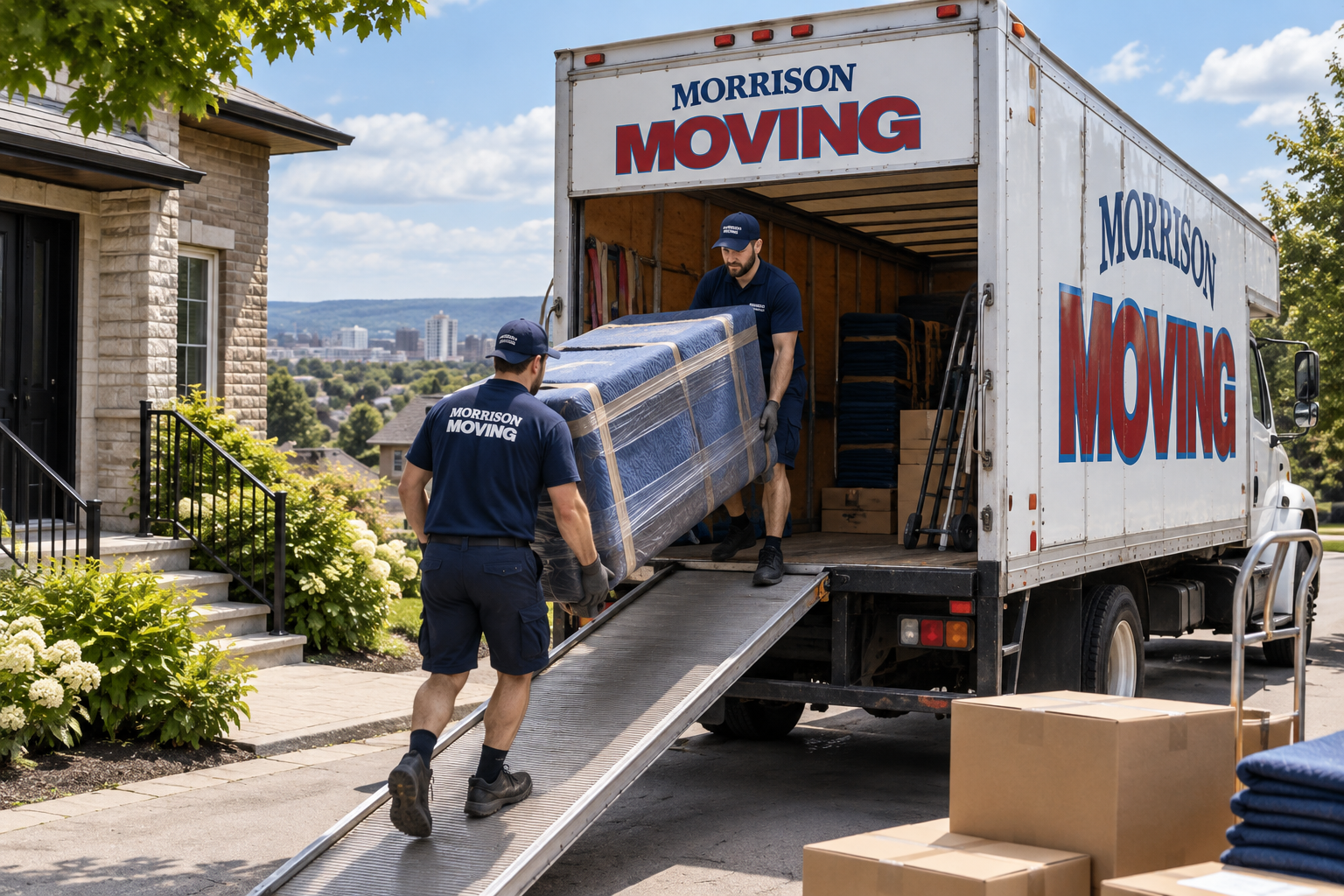
Two homes with a similar number of bedrooms can require very different amounts of moving time. The amount of furniture matters, but it is only one part of the workload. Property access, carrying distance, stairs, elevators, packing readiness and the types of belongings being moved can all affect how the day progresses.
Experienced Hamilton movers consider these practical conditions when preparing for a residential move. Understanding them can help customers know why moving day may take longer than expected without assuming that every delay can be predicted or prevented.
Why Two Similar Homes Can Take Different Amounts of Time
A three-bedroom home does not always create the same workload as another three-bedroom home. One property may have a driveway close to the entrance, furniture that is ready to move and straightforward access throughout the home. Another may involve street parking, several flights of stairs, narrow doorways or belongings spread across a basement, garage and outdoor areas.
These differences affect how the moving crew completes each stage of the job. The physical environment determines how far items must be carried, how frequently the crew can travel between the home and truck, and whether additional preparation is necessary before certain belongings can be loaded.
For this reason, moving time cannot be determined by home size alone.
Distance Between the Home and Moving Truck
Carrying distance is one of the practical factors that can change the pace of loading and unloading. When a moving truck can be positioned close to an entrance, the crew has a relatively direct route between the property and the truck.
Other properties may require a longer route. Street parking, limited driveway access, designated loading areas and long walkways can increase the distance involved with every trip.
This is particularly relevant for condos and apartments. The route may include hallways, lobbies, elevators, parking structures or loading areas before belongings reach the truck. Even when two customers have a similar inventory, a longer carrying distance can create a different workflow.
Professional moving services in Hamilton need to account for these logistical conditions when organizing a residential moving job.
Stairs and Elevators Change the Workflow
Stairs can affect moving time because belongings must be carried through a more demanding route. Multiple flights, turns, landings and narrow stairways can require additional care, especially with larger pieces of furniture.
Elevators create a different set of considerations. A building may require residents to reserve an elevator for moving day, and the elevator may need to be shared with other residents. There can also be specific building access requirements or designated routes for moving furniture.
The distance between the unit, elevator and truck matters as well. A crew working from a high-rise unit through several corridors and a shared elevator has a different workflow from a crew moving belongings directly through a front door to a nearby truck.
Being Packed Does Not Always Mean Being Ready
Packing most belongings into boxes is an important part of preparation, but there can still be unfinished work when the moving crew arrives.
Open boxes may need to be closed and secured. Loose household items may still need packing. Some belongings may be spread throughout the home because they are still being sorted. Furniture may also require preparation before it can be moved.
Each individual task may appear small, but several unfinished tasks can change how the crew approaches loading. Instead of moving items directly to the truck, additional preparation may need to happen first.
Homeowners who do not have enough time to complete all of this work may consider full-service moving. Packing and other moving support can be useful when significant preparation remains before the move.
Furniture Can Add Complexity
Furniture does not create the same handling requirements simply because two pieces occupy a similar amount of space. Size, weight, shape and the route out of the property can all affect how a piece is moved.
A large item may not fit through a doorway in its assembled form. Another piece may need to be carefully moved around a tight corner or down a staircase. Furniture disassembly may sometimes be required before an item can leave the room.
Awkward shapes and heavy pieces can also require more deliberate handling. These conditions are normal parts of moving logistics, but they help explain why the number of furniture pieces does not always provide a complete picture of moving time.
The Actual Inventory Matters
Accurate inventory information gives a moving company a clearer understanding of the expected workload. A description that focuses only on the main rooms can leave out belongings stored elsewhere on the property.
Garages, basements, sheds, storage rooms and outdoor spaces can contain substantial amounts of additional property. Customers should also mention specialty items or furniture that may require additional planning.
The inventory can also change between the estimate and moving day. New items may have been added, or belongings that were originally expected to stay behind may now need to be moved.
When the actual inventory is larger or more complex than anticipated, loading may require additional work. Providing accurate information in advance allows the moving company to plan around a more complete picture of the property and belongings.
Unexpected Conditions Can Change the Plan
Even careful planning cannot account for every condition that may arise on moving day. Parking that was expected to be available may be occupied or restricted. A building elevator may be delayed, or access arrangements may change.
Weather conditions can also affect the workflow. Rain, snow, ice or other conditions may require the crew to adjust how belongings are moved between the property and truck.
There may also be unexpected additional belongings, changes to property access or other restrictions that were not apparent beforehand. These situations do not necessarily mean that anyone planned incorrectly. Moving involves properties, buildings, vehicles and changing conditions, so some adjustments may only become apparent when the work begins.
A professional moving company must be prepared to adapt while continuing to handle the belongings and property appropriately.
Good Planning Helps the Crew Work Efficiently
Customers do not need to understand every operational detail involved in moving. What helps is providing accurate information about the property, belongings and access conditions before moving day.
Details about stairs, elevators, parking access, carrying distance, large furniture, storage areas and specialty items can help the moving company understand the logistics involved. The more complete the information, the better the company can plan equipment, access requirements and other resources for the job.
Planning cannot guarantee a specific completion time or eliminate every unexpected delay. It can, however, give the moving company a clearer understanding of the conditions the crew is likely to encounter.
Planning ahead can help your moving company understand the logistics of your move before moving day. Request a personalized moving estimate from Morrison Moving.
Ultimately, moving time depends on more than the number of bedrooms or boxes in a home. The route to the truck, property access, stairs, elevators, preparation, furniture and actual inventory all shape the workflow. Understanding those variables can help Hamilton homeowners approach moving day with more realistic expectations about why one professional move may take longer than another.