

Moving from two locations requires additional coordination because belongings must be collected from separate addresses and delivered to one destination. Whether you are combining two households, collecting furniture from a family property or moving items out of storage, each location introduces its own requirements.
A successful plan accounts for inventory, property access, pickup order, scheduling and delivery instructions. Understanding these details before moving day helps reduce confusion and gives the moving company the information needed to assess the proposed arrangement.
Why Two Pickup Locations Need Extra Coordination
A move involving two pickup locations is different from a standard residential move because the collection process must account for two separate properties. Each address may have different furniture quantities, parking conditions, loading restrictions and access times.
For example, one household may have most of the furniture while another contains only boxes and smaller belongings. Alternatively, a residence may offer flexible access while a storage facility operates within specific hours.
These differences affect how the moving schedule is organized. The time required at each location depends on the inventory, access conditions and work involved.
When discussing professional moving services, explain the complete collection arrangement rather than treating the second address as an additional stop that can automatically be accommodated.
Confirm whether the moving company can handle both pickups within one booking before finalizing your plans.
Create a Separate Inventory for Each Address
Preparing an accurate moving inventory is one of the most important steps when moving from two locations. Each pickup address should have its own list so the moving company can understand what needs to be collected.
Include major furniture pieces, approximate box counts, appliances, oversized belongings and items requiring special handling. Identify anything that may need disassembly or additional preparation before collection.
For example, one location might contain bedroom furniture, a dining table and 25 boxes. The second might contain a sofa, shelving units and another 15 boxes.
Keeping these inventories separate makes it easier to discuss the requirements of each pickup. It also reduces the risk of overlooking belongings stored at the less frequently used property.
If preparation or packing support is needed, review the company’s full service moving information and confirm which options are available for your situation.
Confirm Access Requirements at Both Properties
Property access can significantly affect how a move is coordinated. A detached home with driveway parking presents different conditions from an apartment building with reserved elevators or a storage unit with controlled entry.
Review the access requirements at both locations independently. Important considerations include parking availability, stairs, elevators, loading distances, building restrictions and permitted moving hours.
For apartment buildings, confirm whether an elevator reservation is necessary. For storage facilities, check gate access, operating hours and any restrictions on loading vehicles.
When researching movers Hamilton residents should provide these details early. A second pickup location should receive the same attention as the primary address.
Clear access information helps the moving company assess the proposed schedule and identify potential complications before moving day.
Decide Which Pickup Should Happen First
There is no universal rule for determining which location should be collected first. The most practical sequence depends on the circumstances at both addresses.
A property with restricted access hours may need to be scheduled before one with flexible entry. However, the quantity and type of belongings at each location may also influence the preferred order.
Travel between pickup addresses and the final destination should be considered when discussing the moving schedule. The company may need to assess how the proposed sequence affects loading and delivery arrangements.
When moving from two locations, avoid assuming that the address closest to the destination should automatically be collected last.
Instead, discuss both inventories, access windows and delivery requirements so an appropriate pickup order can be established.
Make Sure Someone Can Provide Access at Each Location
Coordinating two pickup locations also means establishing who is responsible for providing entry at each property.
The customer may be present at one address while a family member, household partner or authorized contact handles the second. This arrangement requires clear communication before collection begins.
Confirm who has the keys, understands the entry instructions and can identify which belongings are included in the move.
If a storage facility requires an access code or a building requires advance authorization, verify those arrangements beforehand.
When the customer cannot attend both locations, the moving company should know who is authorized to provide access and answer questions.
This helps avoid delays caused by locked properties, unavailable contacts or uncertainty about which items should be collected.
Keep Both Inventories Organized for One Destination
Combining belongings from separate properties creates another challenge when everything arrives at the same destination.
Boxes from two households may contain similar items, and furniture may be intended for different rooms. Without clear identification, belongings can become difficult to organize during unloading.
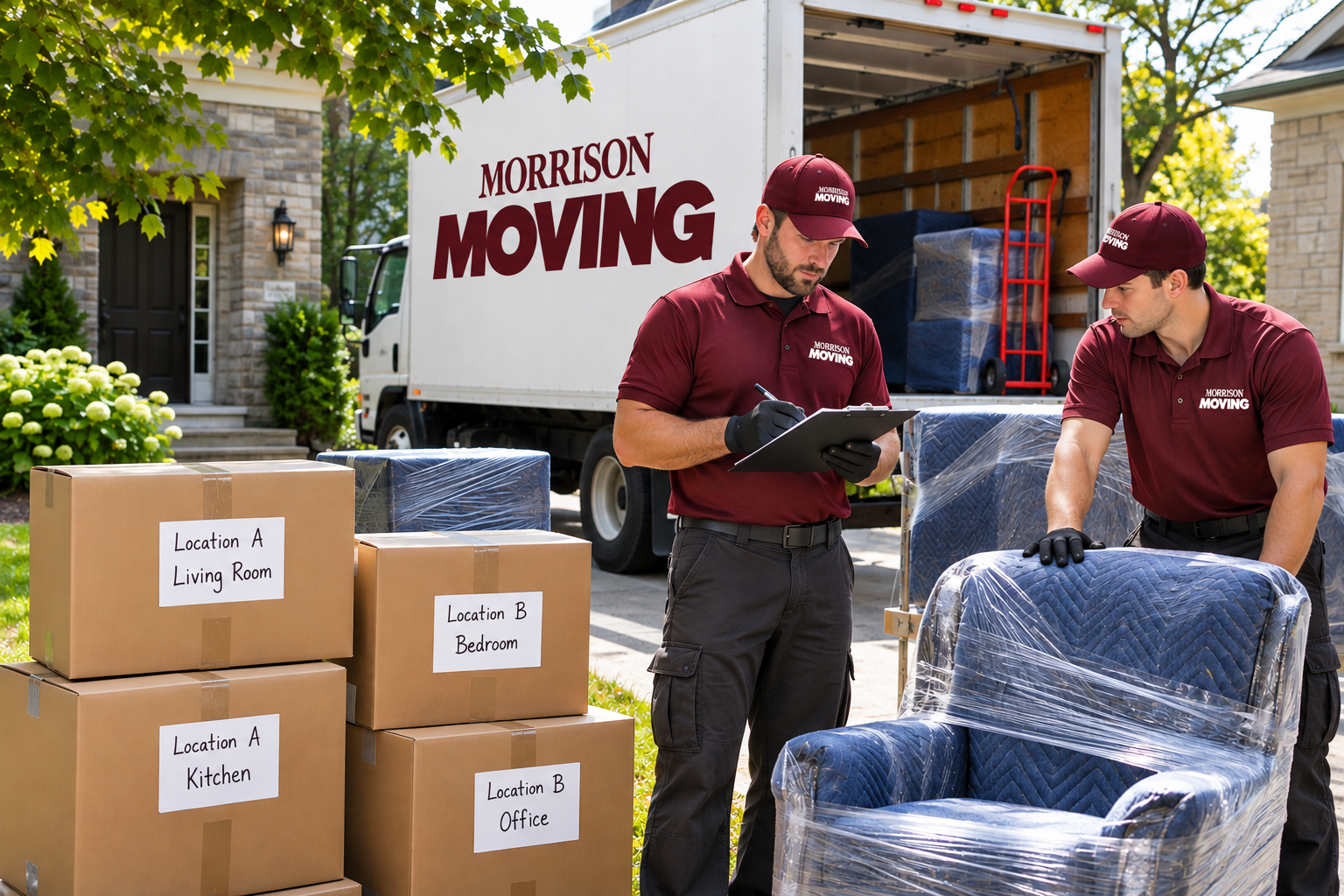
Label boxes and furniture according to their pickup origin and intended destination room.
For example, “Location A – Main Bedroom” and “Location B – Guest Bedroom” provide more useful instructions than labels identifying only the room.
For customers combining households, separate origin labels can also help distinguish similar belongings until they are unpacked.
Keep a copy of each moving inventory available at the destination. This provides a reference when checking what has arrived from each address.
Organized labeling supports clearer unloading instructions without requiring the moving crew to determine where unfamiliar belongings belong.
Tell Your Moving Company About Both Addresses Early
The most important step in planning a move with multiple pickup addresses is communicating the complete arrangement when requesting an estimate.
A moving company Hamilton customers contact should receive both pickup addresses and the final delivery address at the beginning of the discussion.
Provide a separate inventory for each location, including furniture quantities, estimated box counts, oversized items and special handling requirements.
Explain access limitations such as stairs, restricted parking, elevator reservations or storage facility operating hours. Include any timing restrictions that could influence the collection sequence.
If different people will provide access at each property, identify those arrangements as well.
Customers comparing residential movers Hamilton should also ask whether two pickup locations can be accommodated within one booking. Do not assume this arrangement is automatically included in standard residential moving services.
Providing complete information allows the company to assess the requirements, discuss scheduling considerations and explain whether the requested arrangement is available.
Planning a move involving two pickup addresses in Hamilton? Contact Morrison Moving to discuss your inventory, locations and scheduling requirements before you request a moving quote.
Confirm the Pickup Plan Before Moving Day
Once the moving arrangements have been discussed, review the details before the scheduled collection date.
Confirm both pickup addresses, the agreed collection order and the final delivery location. Make sure the inventory information reflects any changes made since the initial estimate.
Verify that parking arrangements, elevator bookings, property access instructions and authorized contacts are still accurate.
The destination should also be ready to receive belongings from both locations, with clear instructions for where furniture and labeled boxes should be placed.
For customers moving from two locations, the objective is not simply to collect everything from two addresses. It is to coordinate both collections so the inventory, access arrangements and delivery instructions work together.
Careful planning and clear communication help establish realistic expectations and reduce avoidable complications during a residential move involving two pickup locations.